
General ENT
General ENT care in Kuwait
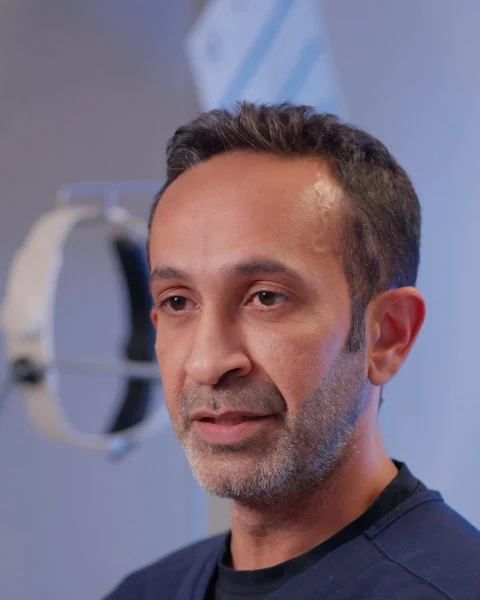
Ear, nose and throat conditions affect breathing, sleep and everyday comfort. Dr. Mohammad BuAbbas is Head of the ENT Department at International Hospital Kuwait, and he treats tonsil and adenoid problems, nose and sinus conditions, and snoring and obstructive sleep apnoea.
Ear, nose and throat
OTO stands for the ear
From the Greek ous, the ear. Otology is the study of the ear, of hearing and of balance.
RHINO stands for the nose
From the Greek rhis, the nose. Rhinology is the study of the nose and sinuses, of breathing and of smell.
LARYNGO stands for the throat
From the Greek larynx, the voice box in the throat. Laryngology is the study of the voice, the airway and swallowing.
Conditions and treatments
Tonsillectomy
Tonsillectomy is the removal of the tonsils. It may be considered for repeated or severe tonsil infections, for tonsils that obstruct breathing or swallowing, or when they contribute to snoring and disturbed sleep. It is performed under general anaesthesia.
A sore throat is expected afterwards and eases gradually. Bleeding is the main risk to be aware of, and the aftercare instructions explain what to watch for and when to seek help.
Adenoidectomy
The adenoids are a pad of tissue at the back of the nose. When they are enlarged they can block breathing through the nose, cause snoring and mouth breathing, and contribute to repeated ear problems. Adenoidectomy removes them, usually through the mouth under general anaesthesia, and it is sometimes combined with tonsillectomy.
Whether surgery is needed depends on symptoms and examination, and it is discussed at consultation, along with the risks.
Septoplasty
The septum is the wall that divides the two sides of the nose. When it is deviated it can block one or both sides and contribute to sinus problems. Septoplasty straightens the septum to improve airflow. It does not aim to change the outer shape of the nose, which is the purpose of rhinoplasty.
Congestion is expected for a time afterwards, and small supports are sometimes placed inside the nose. Risks include bleeding, infection and a persistent blockage, and they are discussed before surgery.
Functional endoscopic sinus surgery (FESS)
FESS uses a thin telescope passed through the nostrils to open the natural drainage pathways of the sinuses and to remove diseased tissue or polyps, without cuts on the face. It is usually considered when long-standing sinus disease has not improved with medical treatment, and it is planned after an examination and a scan.
Risks include bleeding, crusting, infection and, rarely, injury to nearby structures such as the eye socket. They are discussed before surgery.
Allergy management
Allergic rhinitis causes sneezing, a runny or blocked nose and itchy eyes, either in certain seasons or through the year. Management begins with understanding your symptoms and triggers. It may include avoiding triggers where possible, nasal sprays and antihistamines, and, in suitable cases, other treatments such as allergen immunotherapy.
When the structure of the nose adds to the blockage, a procedure such as septoplasty may also be discussed.
Frequently asked questions
No. Many sinus problems are treated with medicines first. Surgery is considered when long-standing symptoms have not improved with treatment, and the decision is made after an examination and, where needed, a scan.
No. Septoplasty straightens the wall inside the nose to improve airflow, while rhinoplasty reshapes the outside of the nose. Some people have both procedures together.
It is considered for repeated or severe infections, for tonsils that obstruct breathing or swallowing, and in some cases of snoring and disturbed sleep. It is not needed for every sore throat, and the decision follows an examination and a discussion of the benefits and risks.
Need an ENT assessment?
Request a consultation to talk through your symptoms, or message on WhatsApp with a short question.